Dress code guide
Business professional
Also written Business professional attire, Business attire, Professional attire, Traditional business attire
The suit-level standard for interviews, boardrooms and client-facing days.
What it means
Business professional attire is the traditional office dress code built around a suit: a matched jacket with trousers or a skirt, a dress shirt or blouse, conservative colors and polished leather shoes. With menswear, a tie is usually expected.
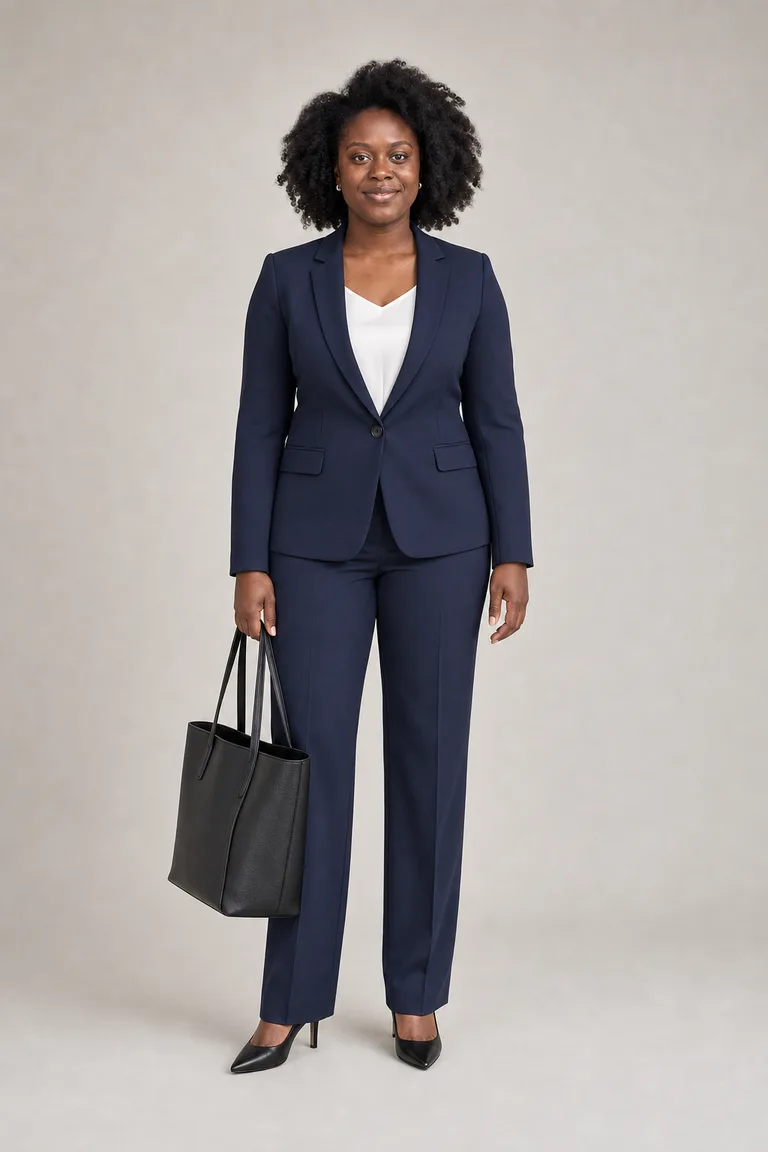
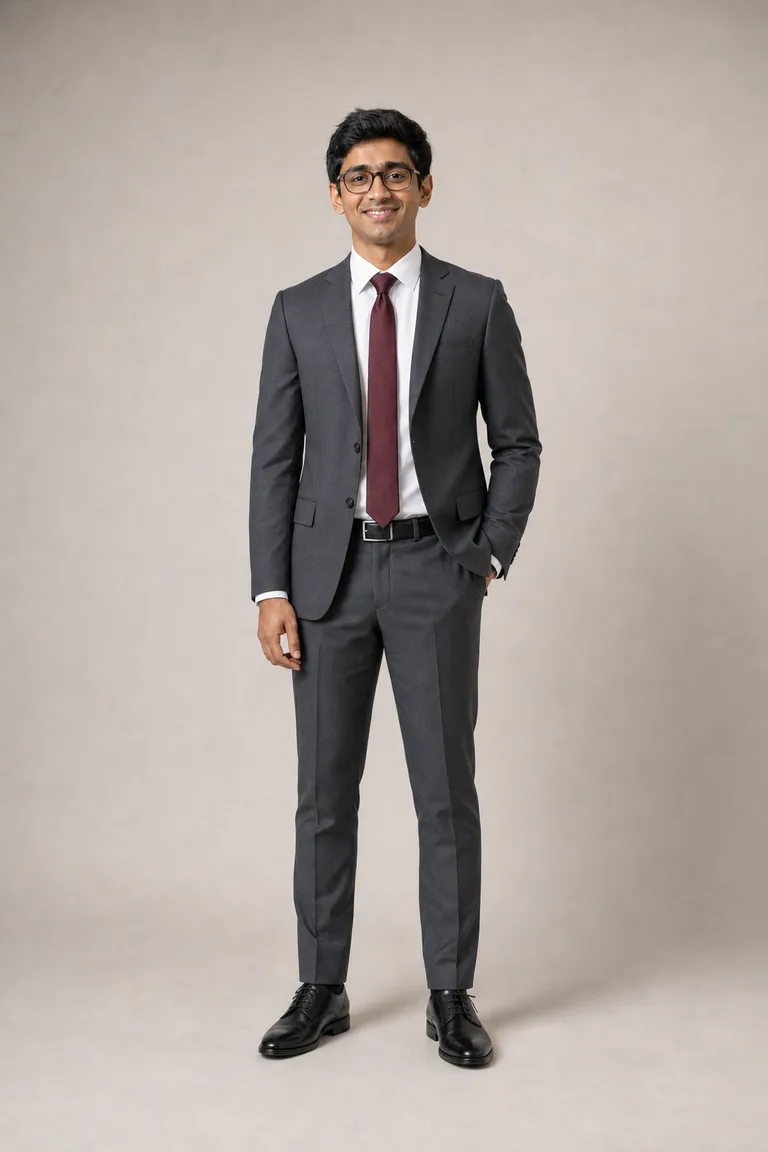
Styled on fictional Avarobe avatars.
What business professional really means
Business professional attire is the classic picture of work clothes: a well-fitted suit, a crisp shirt or blouse, and shoes you've actually polished. It sits a clear step above business casual and just below business formal. You'll see it in law, finance, government, consulting and executive roles, and at job interviews for those fields. Many employers and invitations simply call it business attire.
Fit and fabric carry this dress code. A modest suit tailored to your shoulders and hem looks sharper than an expensive one that pulls or puddles. This guide covers business professional outfits for women and men, the colors and fabrics that read as serious, shoe heights and hemlines, and where the standard has relaxed and where it hasn't. Wear whichever side of the guide suits you; the rules describe the clothes, not the person in them.
When you'll see it
- Job interviews in finance, law, consulting, government and sales
- Court appearances and legal proceedings
- Board meetings, investor pitches and executive presentations
- Everyday dress at banks, law firms and accounting firms
- Conferences where you're speaking or presenting
- Career fairs and professional association events
- A first meeting with a new client in a conservative industry
Business professional for women
For women, business professional means a suit or its equivalent: a pantsuit, a skirt suit, or a tailored sheath dress with a jacket. Underneath, wear a silk blouse, a shell or a fine knit with a modest neckline. Shoes are closed-toe and polished, flat or heeled.
Lengths: Skirts and dresses should land at the knee, or within an inch or so above or below it; pencil and A-line shapes are standard. A midi works if it's tailored rather than full or flowing. Trousers should be full-length and just graze the top of your shoe, or ankle-length with a slim cut. Petite women often need both jacket sleeves and pants shortened; tall women should look for long inseams and sleeves that reach the wrist bone.
Outfits that work
- Navy pantsuit with a single-button blazer and straight-leg trousers, a white silk shell and black pointed pumps.
- Charcoal skirt suit with a knee-length pencil skirt, a pale blue button-front blouse and low block-heel pumps.
- Black wool-crepe sheath dress under a tailored jacket, in the same or a contrasting neutral, with pointed flats.
- Heather gray trouser suit with a burgundy fine-knit top and black leather loafers, for offices where flats are the norm.
- Plus-size option: a matching suit with a single-button jacket that skims the hip, straight or wide-leg trousers, and a V-neck shell. One dark color from shoulder to shoe lengthens the frame.
- Petite option: a shorter jacket that ends at the high hip, high-rise ankle trousers or a knee-length skirt, and pointed pumps with a 2-inch heel. The shorter jacket keeps your proportions balanced.
- Fabrics
- Worsted wool and wool blends for suits
- Wool crepe for dresses and skirts
- Heavier silks and matte crepe for blouses
- Fine merino or silk-blend knits for shells
- Crisp cotton poplin for button-front shirts
- Shoes
- Closed-toe pumps, 1.5 to 3 inches
- Pointed or almond-toe leather flats
- Low block-heel pumps for long days on your feet
- Sleek leather loafers with trouser suits
- Slingback pumps, where the office is less traditional
- Accessories
- A structured leather tote or briefcase
- Pearl or metal studs, or small hoops
- A classic watch on a leather or metal band
- Sheer hosiery for the most traditional settings; otherwise optional
- A fine chain or single pendant
Business professional for men
For men, business professional means a two-piece suit in a dark or mid tone, a long-sleeve dress shirt, a silk tie, and leather lace-ups or sleek loafers with a matching belt. Fit matters most: jacket sleeves should show a quarter to a half inch of shirt cuff, and trousers should have a slight break.
Outfits that work
- Charcoal two-piece suit, white dress shirt, burgundy silk tie, black leather belt and black lace-up shoes.
- Navy suit, light blue shirt, a navy-and-silver striped tie, and a dark brown belt with matching oxfords.
- Mid-gray suit, white shirt, a textured navy tie and black cap-toe oxfords.
- Navy blazer with gray wool trousers, a white shirt and a tie, where the office accepts a jacket-and-tie combination instead of a matched suit.
- Big & tall option: a single-breasted two-button suit in navy or charcoal with a medium-width lapel, trousers with a slight break, and a tie that reaches the belt buckle. Extra-long ties solve the too-short problem.
- Summer option: a tropical wool suit in mid-gray or navy, a breathable poplin shirt and a lighter silk tie.
- Fabrics
- Mid-weight worsted wool for year-round wear
- Tropical wool and wool-linen blends for summer
- Flannel for winter suits
- Cotton poplin, twill and pinpoint oxford for dress shirts
- Silk for ties; fine wool or cotton for dress socks
- Shoes
- Black or dark brown cap-toe oxfords
- Plain-toe or wingtip derbies
- Monk straps
- Polished penny loafers, in less traditional offices
- Sleek leather dress boots in winter
- Accessories
- A leather belt in the same color and finish as your shoes
- Two or three silk ties: navy, burgundy and a classic stripe
- A simple watch
- Over-the-calf dress socks in your trouser color
- A leather briefcase or slim portfolio
Color, time and season
Getting the details right
Navy, charcoal and mid-gray form the backbone, and black suits are fine, though navy and charcoal read more classic in daylight. Shirts and blouses stay light and quiet: white, pale blue, ivory, soft pink or a fine stripe. Color belongs in the tie, blouse or knit: burgundy, forest green, deep teal, plum. Brown shoes suit navy and gray; black works with everything. If you know your color season, choose the shirt or blouse from it, since it sits right next to your face.
Summer
Choose tropical wool, wool-linen or high-twist wool, and half-lined or unlined jackets. Carry the jacket on the commute if you must, but wear it into meetings. Stick to long sleeves under a suit jacket; short-sleeve dress shirts look off with tailoring.
Winter
Switch to flannel and heavier worsteds, add a knee-length wool overcoat or a lined trench, and wear opaque tights with skirt suits if you like. On snowy days, commute in boots and change into dress shoes at the office.
Industry and office culture
Law, banking, government and accounting hold this standard firmly. Consulting firms and corporate headquarters often relax to business casual except with clients. In tech, a full suit can look overdressed, even at some interviews, so ask the recruiter what the team wears.
Day vs evening
For a business dinner or evening reception, the same suit works. A darker suit, a crisper white shirt, or a blouse with a soft sheen adds a sense of occasion without drifting into cocktail wear.
Etiquette
Do's and don'ts
Do
- Tailor your suit: shoulders first, then sleeves, waist and hem.
- With a two-button jacket, fasten the top button when standing and undo it when seated.
- Press shirts and blouses, and brush or steam suits between wears.
- Polish your shoes and replace worn heels and soles.
- Keep accessories few and quiet so attention stays on your face and your words.
- Research the company: check team photos and ask the recruiter what people wear.
Don't
- Don't wear a suit that pulls across the buttons or bunches at the ankle.
- Skip short-sleeve shirts under a suit jacket.
- Avoid loud patterns, novelty ties and visible logos.
- Don't wear open-toe sandals, sneakers or casual boots.
- Avoid low necklines, sheer fabrics and short hems.
- Go easy on fragrance; a light touch or none is safest in meetings.
Compared
Business professional vs. other dress codes
Business professional vs. business casual
Business casual drops the matched suit and makes the tie optional, so chinos, sweaters and separates are fine. Business professional expects a suit, or a dress with a jacket.
Business professional vs. business formal
Business formal is the step above: the darkest suits, a tie every time, and extras like cufflinks or a pocket square at evening events. For business professional, any well-fitted suit in a conservative color does the job.
Questions
Business professional FAQ
What is the difference between business professional and business casual?
Business professional means a suit; business casual doesn't. Business professional calls for a matched jacket with trousers or a skirt, a dress shirt or blouse, a tie for menswear and polished leather shoes. Business casual allows separates such as chinos and sweaters, drops the tie, and often permits polos, flats and sometimes dark jeans.
Do women have to wear a skirt for business professional?
No. Pantsuits are fully business professional and have been standard for decades. Choose a tailored pantsuit, a skirt suit or a sheath dress with a jacket, based on your comfort and the setting. A few very traditional workplaces lean toward skirts, but well-cut trousers are appropriate in interviews, courtrooms and boardrooms.
Is a black suit business professional?
Yes. A well-cut black suit is business professional and common across many industries, especially in womenswear. Navy and charcoal read a little more classic for daytime meetings and interviews, and they pair more easily with brown shoes. If you're buying just one suit, charcoal or navy is the most versatile choice.
Do you need a tie for business professional?
Usually, with menswear. A tie is the default in law, finance, government and most interviews, though some companies have gone tieless with suits outside client meetings. When unsure, wear the tie; you can always take it off. Pick silk in a classic pattern and skip novelty prints.
Are loafers business professional?
Sleek ones are. Polished leather penny loafers in black or dark brown work with suits in many business professional offices, and leather loafers suit trouser suits in womenswear. Chunky lug soles, bright suede and driving moccasins are too casual. For the most formal interviews, choose lace-up oxfords, or closed-toe pumps and flats.
Is business attire the same as business professional?
Usually, yes. When an employer or invitation says business attire, it generally means business professional: a suit, or a dress or skirt with a jacket, in conservative colors. Some people use the phrase loosely for business casual, so ask if the setting seems relaxed. For evening events, business attire can lean toward business formal.
Keep reading
Related guides
What to wear to…
Avarobe
See business professional on your own body.
Tell Avarobe where you're going. It decodes the dress code and shows complete outfits on an avatar made from your selfie, in your best colors.
3 looks free · No credit card