Dress code guide
White tie
Also written full evening dress, white tie and tails, full dress
The top of the formality ladder: tails, ball gowns and long gloves.
What it means
White tie is the most formal Western dress code: a black tailcoat, white piqué waistcoat, wing-collar shirt and white bow tie for men, and a full-length ball gown, often with long gloves, for women.
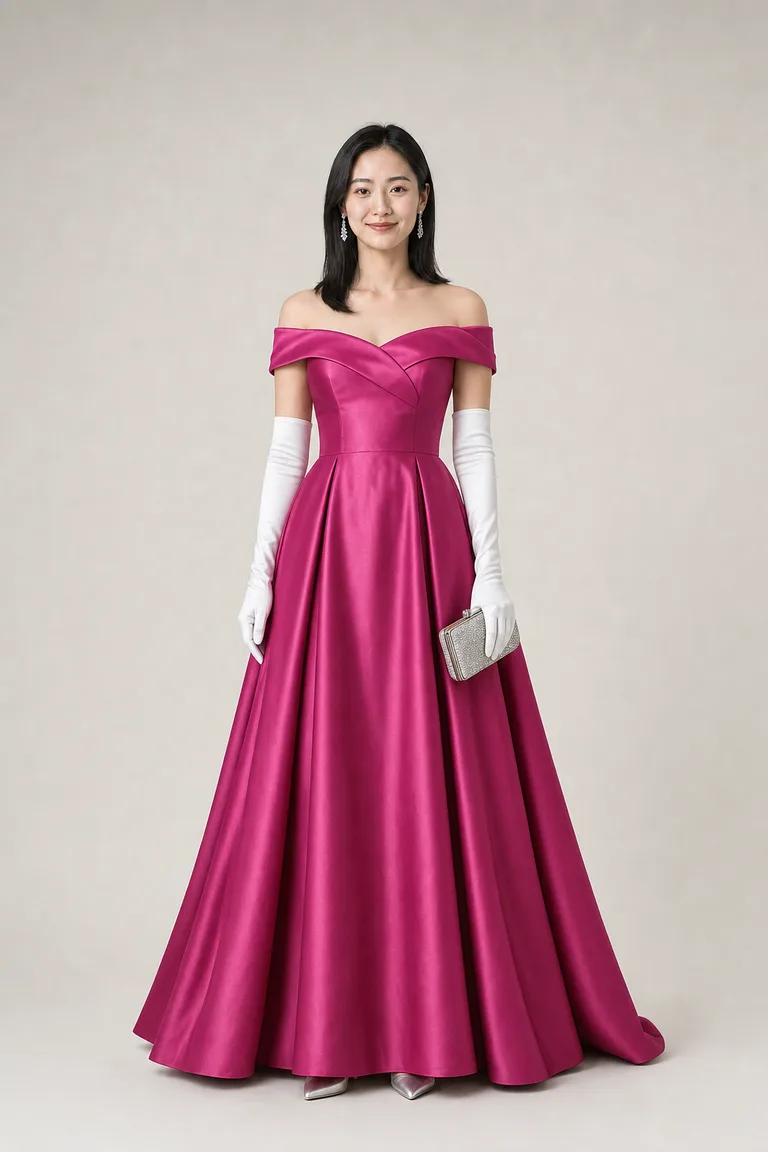
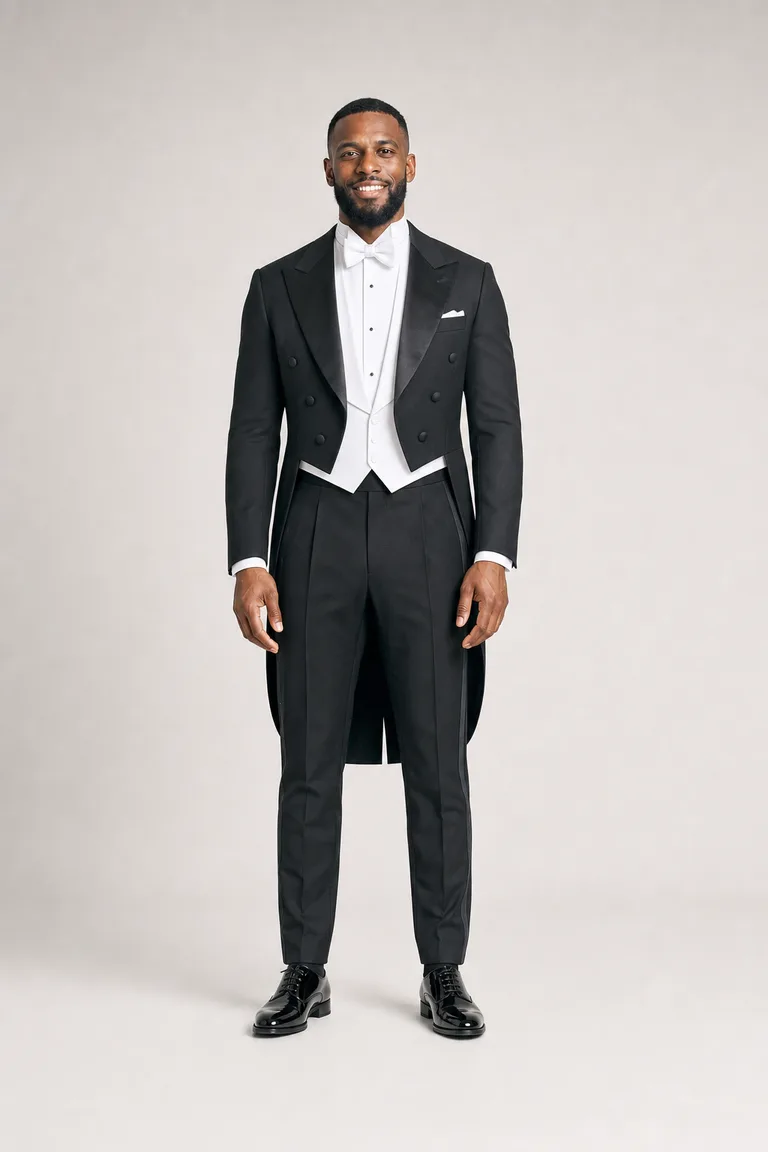
Styled on fictional Avarobe avatars.
What white tie really means
White tie is rare, which is exactly why it causes so much head-scratching. In the US you'll mostly meet it at traditional debutante and cotillion balls, some opera and charity balls, the occasional state dinner and a handful of very formal weddings. Where black tie allows several acceptable variations, white tie is close to a uniform: a tailcoat ensemble for men and a true ball gown for women, both worn only in the evening.
Because the pieces are specialized, planning matters. Few people own tails, and not every formalwear shop rents them, so start looking as soon as the invitation arrives. Fit is what separates a good white tie look from a costume: the waistcoat must stay hidden under the front of the tailcoat, and the shirt cuffs should show just below the sleeves. The tailcoat route is open to anyone; full white tie cut to your body is correct whatever your gender.
When you'll see it
- Traditional debutante and cotillion balls
- Viennese-style balls and some opera galas
- The occasional state dinner or diplomatic reception
- Royal banquets and national award ceremonies abroad
- A small number of very formal weddings and society galas
- Certain university, fraternal or civic balls with long traditions
White tie for women
A full-length ball gown is expected, usually with a fuller or more structured skirt than a black tie gown. Long gloves are traditional, and this is the moment for your finest jewelry. Everything should feel deliberate, from the hem to the hair.
Lengths: Floor-length only. Hem it so the skirt just meets the floor when you're wearing your evening shoes; a short train is fine. Midis, tea-length dresses and high slits don't meet the code.
Outfits that work
- Duchess satin ball gown with a fitted bodice and full skirt, over-the-elbow gloves in white or a matching shade, and diamond-look drop earrings
- Off-the-shoulder silk taffeta gown with a structured bodice, satin pumps and a small hard-case clutch
- Long-sleeve velvet gown with a boat or sweetheart neckline for winter balls, with a faux fur stole
- A full tailcoat ensemble cut for your body: black tailcoat, white piqué waistcoat and bow tie, wing-collar shirt and trousers with double braid
- Plus-size: a ball gown with a boned bodice and a full A-line skirt in satin or taffeta, with cap or sheer long sleeves if you like, and gloves in white or a matching shade
- Petite: a ball gown with a natural or slightly raised waist and a moderately full skirt that keeps the proportions balanced, with elbow-length gloves
- Fabrics
- Duchess satin
- Silk taffeta and silk faille
- Velvet for winter
- Embroidered or beaded tulle
- Chiffon layered over a structured base
- Shoes
- Satin or silk pumps, dyed to match the gown
- Metallic pumps in gold or silver
- Jeweled heeled sandals
- Low heels or embellished flats for dancing, hidden by the hem
- Accessories
- Long gloves in kid leather or satin, white or matched to the gown
- Your finest jewelry: drop earrings, a necklace, bracelets worn over the gloves
- A small minaudière or satin clutch
- An evening coat, velvet cape or faux fur stole
- Orders and decorations, if you're entitled to wear them
White tie for men
White tie is a uniform, and every element is prescribed. The two fit rules that matter most: the white waistcoat (vest) must not show below the front of the tailcoat, and the back of the tailcoat should end around the back of the knee. Everything is black and white, with no color added.
Outfits that work
- The full ensemble: black wool tailcoat with silk-faced peak lapels, matching high-waisted trousers with two lines of braid, white piqué waistcoat, white piqué bow tie, stiff-front white shirt with a wing collar, studs and cufflinks, black patent shoes
- Midnight navy tailcoat and trousers in place of black, with the same white accessories; traditional but rarely seen
- For arriving and leaving in cold weather: a black or navy chesterfield overcoat, a white silk scarf and dress gloves
- For dancing at a ball: white gloves in cotton or kid, which some traditional balls still expect
- Big & tall: a tailcoat altered or rented in your size so the fronts end at the natural waist and cover the waistcoat, with high-rise trousers on suspenders to keep everything aligned
- Military or national dress: service members may wear formal mess dress, and formal national or cultural dress of equal formality is also correct
- Fabrics
- Wool barathea or doeskin for the tailcoat and trousers
- Silk satin or grosgrain for the lapel facings and trouser braid
- Cotton piqué, also called marcella, for the waistcoat, bow tie and shirt front
- Silk for the evening scarf
- Shoes
- Black patent leather oxfords, plain toe
- Patent opera pumps with a flat grosgrain bow, the most traditional choice
- Mirror-shined black calf oxfords if patent isn't available
- Black silk over-the-calf socks with any of the above
- Accessories
- White piqué bow tie, self-tied
- Mother-of-pearl or plain metal shirt studs with matching cufflinks
- Suspenders (braces) instead of a belt
- A pocket watch on a chain across the waistcoat, instead of a wristwatch
- A white boutonnière, such as a carnation or gardenia
Color, time and season
Getting the details right
For men, white tie allows only black (or midnight navy) and white. For women, gowns can be any rich or luminous color: jewel tones, deep reds, midnight blue, black, metallics or elegant pastels. White and ivory gowns are traditionally reserved for debutantes at debutante balls and for the couple at weddings, so choose another color at those events. Prints are unusual; texture, embroidery and beading supply the interest instead.
Evening only
White tie begins after 6 p.m. Morning dress is its daytime counterpart, and the two are never mixed.
Balls and dancing
Choose shoes you can dance in for hours and gloves that let you move freely. A gown with a bustle or detachable train makes dancing easier.
Summer
Gowns move to lighter taffeta, faille or chiffon over structure. Men still wear the full black tailcoat; there is no white-jacket version of white tie.
Ceremonies and religious settings
If the evening includes a religious service, bring a stole or bolero to cover bare shoulders, and follow local customs for head coverings.
Etiquette
Do's and don'ts
Do
- Reserve tails weeks in advance; rental stock is limited.
- Check that the waistcoat stays hidden under the front of the tailcoat.
- Wear suspenders, not a belt, with high-waisted trousers.
- Remove your gloves to eat and drink, and rest them in your lap or bag.
- Wear miniature medals or decorations only when the invitation mentions decorations and you are entitled to them.
- Practice walking, sitting and dancing in your gown and shoes before the night.
Don't
- Don't substitute a tuxedo; it's a full step down.
- Don't wear a black waistcoat or black bow tie with tails; white tie means white.
- Don't wear a cocktail dress, a midi or a jumpsuit.
- Don't wear rings over your gloves; bracelets are fine.
- Don't wear a wristwatch; a pocket watch or none is traditional.
- Don't add colored ties, pocket squares or waistcoats.
Compared
White tie vs. other dress codes
White tie vs. black tie
Black tie swaps the tailcoat for a tuxedo jacket, the white piqué waistcoat and bow tie for black ones, and the ball gown for a wider range of evening gowns and dressy alternatives.
White tie vs. formal attire
Formal on an invitation almost never means white tie. It usually points to long gowns or dressy midis with a tuxedo or dark suit; hosts who want white tie always spell it out.
Questions
White tie FAQ
What is the difference between white tie and black tie?
White tie is one step more formal. Men wear a black tailcoat with a white piqué waistcoat, white bow tie and wing-collar shirt instead of a tuxedo with a black bow tie. Women wear a full ball gown, often with long gloves, rather than the broader range of gowns and dressy options black tie allows. Both are evening dress codes.
Can you wear a tuxedo to a white tie event?
No. A tuxedo is black tie, a full step below, and it will stand out among tailcoats. If the invitation says white tie, rent or buy a proper tailcoat ensemble, including the white waistcoat, wing-collar shirt and white bow tie. The one exception is when a host explicitly allows black tie as an alternative, which some do to make events more accessible.
Do women have to wear gloves to a white tie event?
Not always, though long gloves are traditional and still common at the most formal balls. Many modern hosts treat them as optional. If you wear them, choose white or a shade that matches your gown, reaching above the elbow for sleeveless styles. Take them off to eat and drink, and never wear rings over them; bracelets on top are fine.
Can you rent white tie?
Yes, but plan ahead. Some formalwear rental shops and tailors carry tailcoats, waistcoats and wing-collar shirts, though stock is far smaller than for tuxedos, especially in less common sizes. Start your search early, book a fitting, and confirm that the rental includes the white piqué waistcoat and bow tie, since some packages substitute pieces meant for other outfits.
Can women wear pants to a white tie event?
Only as full white tie. A floor-length ball gown is the traditional choice, but a properly tailored white tie ensemble, with tailcoat, white waistcoat, wing-collar shirt and white bow tie, is equally formal and increasingly accepted. An evening trouser suit or jumpsuit, however elegant, falls below the code. If you're unsure how a host views it, ask ahead.
Is white tie ever used for weddings?
Yes, but rarely. A white tie wedding is usually an evening ceremony with a formal dinner and dancing, often at a grand hotel, historic venue or private club. Guests follow the same rules as any white tie event, with one addition: leave white and ivory gowns to the couple. Expect a receiving line and plan for a long evening on your feet.
Keep reading
Related guides
Avarobe
See white tie on your own body.
Tell Avarobe where you're going. It decodes the dress code and shows complete outfits on an avatar made from your selfie, in your best colors.
3 looks free · No credit card