Seasonal color analysis
Find the colors that make you glow
Color analysis matches clothes, makeup and hair to your natural coloring. The right shades brighten your skin, soften shadows and make your eyes look clearer. The wrong ones make you look tired, even after a full night's sleep.
The twelve-season system sorts that coloring by three traits and gives each season its own palette. Here is how it works, what every season looks like, and three ways to find yours.
How it works
Three traits decide your season
Warm ↔ cool
Undertone
The color beneath your skin’s surface: golden, peachy or olive reads warm; pink, rosy or blue-red reads cool. It decides whether gold or silver, cream or crisp white, looks like it belongs to you.
Light ↔ deep
Value
How light or dark your overall coloring is, across skin, hair and eyes together. Light coloring glows in lighter shades; deep coloring can carry rich, dark ones without being overwhelmed.
Soft ↔ bright
Chroma
How clear or muted your coloring is. Bright, high-contrast coloring needs saturated colors to match its energy; soft, blended coloring looks best in dusty, gently grayed shades.
Every season has one dominant trait and a secondary one. A Soft Autumn is mostly soft and a little warm; a Deep Winter is mostly deep and a little cool. That is why each family, Spring, Summer, Autumn and Winter, splits into three seasons, and why neighboring seasons can share colors.
The 12 seasons
Every season and its palette
Spring
Light Spring
Light, warm and luminous, like peach blossoms and pale sunshine on a clear April morning.
Warm Spring · True Spring
Golden, sun-warmed and lively, like marigolds, ripe apricots and turquoise water at noon.
Bright Spring · Clear Spring
Vivid, crisp and sunny, like a bowl of tropical fruit under a cloudless sky.
Summer
Light Summer
Cool, airy and delicate, like sea glass, sweet peas and a powder-blue sky.
Cool Summer · True Summer
Cool, calm and rosy, like blue hydrangeas, ripe raspberries and a slate-blue lake.
Soft Summer · Muted Summer
Muted, cool and velvety, like lavender fields in haze, sea mist and weathered stone.
Autumn
Soft Autumn · Muted Autumn
Golden light through morning haze: warm, muted coloring where skin, hair and eyes blend instead of contrast.
Warm Autumn · True Autumn
Copper, cinnamon and burnished gold: rich, fully warm coloring that glows like leaves in late-afternoon sun.
Deep Autumn · Dark Autumn
Espresso, mahogany and firelight: deep, warm coloring with rich contrast and a golden glow.
Winter
Deep Winter · Dark Winter
Midnight velvet and cut gemstones: deep, cool coloring with dramatic contrast and jewel-like intensity.
Cool Winter · True Winter
Fresh snow, black ice and a ruby set in silver: crisp, blue-based coloring with clean, high contrast.
Bright Winter · Clear Winter
Sunlight on cut glass: vivid, cool-leaning coloring with electric clarity and striking contrast.
Find yours
Three ways to find your season
Take a quiz
Eight questions about your veins, jewelry, hair, eyes and contrast narrow the twelve seasons down to your most likely one. Free and quick, but it relies on how you judge your own coloring.
Take the quizGet draped in person
A color analyst holds fabric drapes under your face in neutral light and compares how each one changes your skin. The classic method, and the most hands-on, but it takes an appointment.
Analyze a selfie
Avarobe reads your undertone, hair and eyes from one photo, names your season and builds your palette. The full report adds a drape test made from your own face, best and worst colors side by side.
Find my seasonSee it for yourself
What a drape test shows
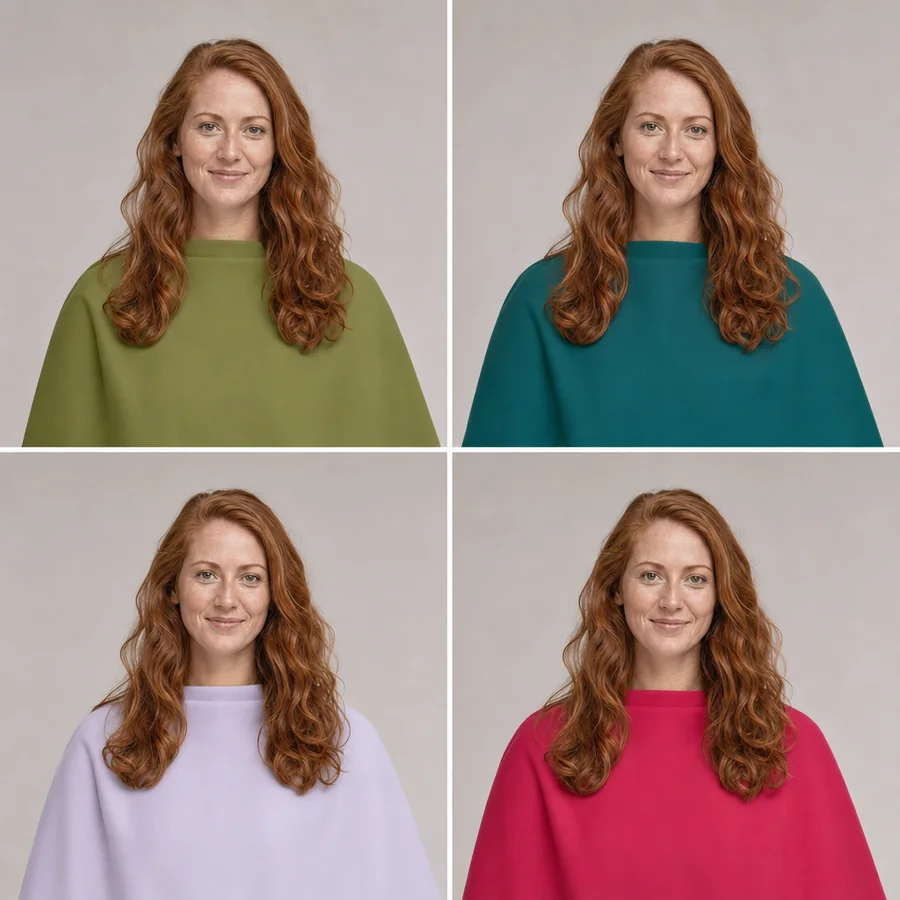
A drape test puts the same face, in the same light, next to different colors. In the top row, olive and warm teal echo this Warm Autumn's copper hair and green eyes: her skin looks even and warm, and her eyes look brighter.
In the bottom row, icy lavender drains the warmth from her skin, and cool fuchsia competes with her hair and pulls attention away from her face. Same person, same light: the only thing that changed is the color under her chin.
That is what your season does for you. Once you know it, you can shop, pack and get dressed knowing which colors will work before you try them on. See the full Warm Autumn palette.
Questions
Color analysis FAQ
What is seasonal color analysis?
Seasonal color analysis is a method for finding the colors that flatter your natural coloring. It looks at your undertone, value and chroma and places you in one of four families, Spring, Summer, Autumn or Winter, each split into three seasons. Your season comes with a palette to use for clothes, makeup, hair and jewelry.
What are the 12 seasons in color analysis?
The twelve seasons are Light, Warm and Bright Spring; Light, Cool and Soft Summer; Soft, Warm and Deep Autumn; and Deep, Cool and Bright Winter. Each is named for its strongest trait. Warm and cool seasons are also called True seasons, deep seasons are called Dark, and bright seasons are called Clear.
How do I know if I am warm or cool toned?
Look at your inner wrist in daylight: greenish veins suggest warm, blue or purple suggest cool, and a mix suggests neutral. Gold jewelry flattering you more than silver points warm; the reverse points cool. Cream versus bright white near your face is another good test.
Can I get a color analysis online?
Yes. An online quiz gives you a likely season in minutes, and AI analysis from a selfie reads your coloring directly from a photo. For the best result, use a photo taken in natural daylight, facing a window, with no filter and little or no makeup.
How accurate is AI color analysis?
It is as accurate as the photo it reads. Daylight, no filters and bare skin give a reliable read of your undertone, hair and eyes. A drape test, your face next to your best and worst colors in the same light, lets you check the result with your own eyes.
Does my color season change with a tan or gray hair?
Your undertone stays the same for life, so your family usually does too. A deep tan or going gray can shift you to a neighboring season, for example toward a softer or lighter version of your palette. Many people simply lean on the lighter or softer shades of their season as their coloring changes.
Avarobe
Find your season from one selfie.
Avarobe reads your undertone, hair and eyes, names your season and shows your best colors in complete outfits on your own avatar.
3 looks free · No credit card